

Top Orthodontic Wire Technology Trends to Watch in 2026
The most important orthodontic wire trends in 2026 are digitally planned treatment, more precise force selection, temperature-responsive NiTi arch wire systems, lower-friction mechanics, and better integration between wires, brackets, imaging, and workflow software. The best dental archwire is not necessarily the newest material; it is the wire whose force behavior, dimensions, and stage-specific purpose match the patient and the treatment plan.
- NiTi arch wire technology remains central to early alignment because clinicians can select different force and activation behaviors for staged tooth movement.
- Heat-activated and copper-containing alloys support more temperature-responsive force delivery, but clinical selection still depends on the case.
- Digital scans, treatment simulation, and data-driven planning are making wire and bracket selection more individualized.
- Stainless steel remains important for working, finishing, torque expression, and dimensional control.
- Procurement teams should evaluate consistency, documentation, packaging, and regulatory support alongside material claims.
Orthodontic wire development is increasingly connected to the broader digital dentistry workflow. The 2026 outlook is not simply about replacing one alloy with another: it is about matching a dental archwire to a digitally defined objective, a bracket system, and a clinically appropriate force sequence. 3Shape identifies AI, generative AI, and intraoral scanning as major digital dentistry trends for 2026, while orthodontic innovation coverage points to self-adjusting wires and custom 3D-printed appliances as emerging directions. These developments make material knowledge and workflow integration equally important.
1. Digital treatment planning will influence orthodontic wire selection
Digital planning will make wire selection more deliberate because clinicians can define movement objectives before treatment begins. Intraoral scans, photographs, radiographs, and digital setups can help the team evaluate crowding, arch form, rotations, space requirements, and finishing priorities.
A digital model does not automatically prescribe a specific wire, and it should not replace clinical judgment. Its practical value is that it gives the orthodontist a clearer reference for deciding when to prioritize gentle alignment, transverse control, torque, space closure, or finishing precision. The wire becomes one component in a planned force system rather than an isolated consumable.
Digital twin concepts may also improve patient communication by showing a simulated treatment outcome. One 2026 dental technology overview describes digital twin technology as a way to simulate how teeth may look after orthodontic treatment. Such simulations are useful for discussing expectations, but they remain simulations rather than guarantees. Tooth biology, compliance, anchorage, periodontal conditions, and appliance changes can all affect the final result.
2. NiTi arch wire systems will become more stage-specific
NiTi arch wire products will continue to dominate early alignment, but the trend is toward more precise stage and case matching. Nickel-titanium alloys are valued in orthodontics for their elastic behavior and ability to deliver relatively light, continuous forces over a useful activation range.
The main technology question is not whether NiTi is useful; it is how its force characteristics fit the treatment stage. Round wires are commonly associated with initial leveling and alignment, while larger or rectangular wires are used later when the treatment objective requires greater control. Exact selection depends on the appliance prescription, arch form, malocclusion, and clinician protocol.
Patients often experience the benefit as fewer abrupt force changes, but comfort cannot be promised by alloy name alone. Wire size, deflection, ligation, bracket engagement, tooth position, and tissue response all influence the experience. A low-force product can still feel uncomfortable if it is poorly adapted or used in an unsuitable stage.
| Stage number | Typical objective | Wire family commonly considered | Primary selection question |
|---|---|---|---|
| 1 | Initial alignment | Superelastic or heat-responsive NiTi | Can the wire engage irregular teeth with an appropriate force level? |
| 2 | Leveling and arch coordination | NiTi or related temperature-responsive alloy | Does the wire support the planned arch form without excessive force? |
| 3 | Working control | Rectangular NiTi or stainless steel, depending on the plan | Is torque, rotation, and space management control sufficient? |
| 4 | Finishing | Stainless steel, finishing wires, or selected specialty forms | Can the clinician make small, predictable adjustments? |
The four-stage table is a treatment-planning framework, not a universal prescription. Orthodontists may combine, omit, or repeat stages according to the case.
3. Heat-activated and copper-containing alloys will support personalized force delivery
Temperature-responsive wires are designed to change their mechanical behavior within a clinically relevant temperature range, which can help clinicians manage activation and force delivery. Heat-activated NiTi and copper-containing NiTi are therefore likely to remain important in comfort-oriented and staged treatment strategies.
The clinical advantage is conditional rather than automatic. Oral temperature, wire activation, bracket engagement, laboratory storage, and the actual deflection of the wire all affect performance. A heat-responsive wire should be selected with an understanding of how it behaves in the mouth, not only from a marketing description.
Copper-containing alloys are often discussed in relation to more controlled unloading behavior and thermal response. However, product performance varies by composition, dimensions, manufacturing process, and test method. Buyers should request technical documentation that identifies the product family, cross-section, dimensions, recommended use, and quality controls.
4. Stainless steel will remain essential for control and finishing
Stainless steel will remain a core dental archwire material because its stiffness, formability, and dimensional control are useful when precise bends, torque expression, space closure, and finishing adjustments are required.
The continued role of stainless steel is an important counterpoint to the idea that orthodontic technology is moving toward one universal smart wire. Early alignment often benefits from flexibility, whereas later mechanics may require a wire that holds a bend and transfers a defined adjustment more directly. The appropriate material is determined by the mechanical objective.
Reverse-curve, finishing, and other specialty forms can address specific vertical or arch-form objectives, but their use requires careful assessment of side effects and anchorage. Wire shape should be considered together with bracket prescription, elastics, temporary anchorage devices, and the patient’s periodontal condition.
5. Lower-friction mechanics will focus on the complete appliance system
Lower friction is a system property, not a guaranteed result of one wire coating or one bracket design. Friction and binding are influenced by wire material, cross-section, bracket geometry, ligation method, angulation, surface condition, saliva, and the direction of tooth movement.
Self-ligating brackets, polished surfaces, optimized bracket slots, and compatible wires may support efficient handling, but clinical outcomes cannot be reduced to a single friction claim. A 2026 orthodontic innovation discussion highlights self-adjusting wires and custom 3D-printed appliances as emerging developments. These ideas are promising, but they still require appropriate validation, training, and case selection.

For patients, the practical benefit of a well-designed low-friction system may be easier wire placement, smoother sliding mechanics, or fewer adjustments in selected situations. It should not be presented as a guaranteed shorter treatment time or a substitute for careful diagnosis.
6. Manufacturing consistency will become a stronger buying criterion
Manufacturing consistency will matter as much as headline alloy terminology because clinicians need repeatable force behavior, accurate dimensions, dependable packaging, and predictable availability across treatment stages.
For a distributor or clinic, a useful supplier review should cover the following points:
- Confirm whether the stated alloy, cross-section, arch form, and dimensions are documented for each SKU.
- Ask how incoming materials, drawing, heat treatment, surface finishing, and final inspection are controlled.
- Review batch identification, packaging integrity, shelf-life information where applicable, and complaint handling.
- Verify regulatory and quality documentation for the target market rather than assuming that one market authorization applies everywhere.
- Compare delivery reliability and replacement procedures, not only unit price.
| Evaluation category | Priority number | Evidence to request | Risk if overlooked |
|---|---|---|---|
| Material identity | 1 | Alloy and product specification | Unexpected mechanical behavior |
| Dimensional accuracy | 2 | Cross-section and tolerance information | Inconsistent engagement or control |
| Batch traceability | 3 | Lot coding and quality records | Difficult investigation or recall response |
| Regulatory support | 4 | Applicable certificates and technical files | Procurement or market-access delays |
| Supply continuity | 5 | Lead-time and replenishment policy | Interrupted treatment workflow |
The priority numbers above are a procurement checklist sequence, not a statistical ranking. The right weighting depends on the buyer’s market, clinical use, and quality system.
7. Integrated product systems will outperform isolated wire innovation
The most useful 2026 orthodontic wire portfolios will connect wires with brackets, buccal tubes, elastomerics, and clinical instruments. A wire cannot perform as intended if the supporting components are poorly matched or difficult to handle.
For example, an initial alignment workflow may require a flexible NiTi arch wire, a bracket with reliable bonding, and ligation that secures the wire without unnecessary resistance. Space closure may add power chain or other elastic components, while finishing may require stainless steel and precise wire-forming instruments. The value is in the coordinated sequence.
3D printing will also influence how practices think about customization. Dental technology coverage for 2026 describes continued expansion of 3D printing beyond study models. Custom appliances and digital models may improve planning and manufacturing flexibility, but standard arch wires will remain attractive where clinics need reliable availability, familiar protocols, and efficient chairside handling.
How to choose an orthodontic wire for a 2026 workflow
The safest selection process starts with the treatment objective and ends with verified product evidence. A practical decision guide is:
- Define the movement: alignment, leveling, arch coordination, torque, space closure, or finishing.
- Assess the case: crowding, rotations, periodontal status, anchorage, compliance, and sensitivity.
- Select the behavior: flexible, superelastic, heat-responsive, formable, or rigid according to the objective.
- Check compatibility: bracket slot, prescription, ligation, arch form, and required auxiliaries.
- Verify the supplier: dimensions, batch control, regulatory documents, packaging, and technical support.
A real-world scenario illustrates why this sequence matters: an adult patient seeking discreet, comfortable treatment may value a ceramic bracket and temperature-responsive wire, but the clinician must still consider engagement difficulty, hygiene, force levels, and the later need for precise finishing. The material choice should serve the complete plan rather than the patient’s preference alone.
Frequently asked questions
1. What is an orthodontic wire?
An orthodontic wire is the active component that delivers force through brackets or other attachments to guide tooth movement. Its effect depends on material, cross-section, shape, activation, and the rest of the appliance system.
2. What is a NiTi arch wire used for?
A NiTi arch wire is commonly used during early alignment and leveling because its elastic behavior can help engage displaced teeth while delivering a controlled force over a useful activation range.
3. Are heat-activated wires better than standard NiTi?
Not universally. Heat-activated wires may be useful when their temperature response matches the treatment objective, but the best choice depends on the case, dimensions, activation, and clinician protocol.
4. When is stainless steel archwire preferred?
Stainless steel is often considered when the clinician needs greater stiffness, precise bends, dimensional control, torque expression, space management, or finishing adjustments.
5. Does a low-friction wire shorten treatment time?
Not necessarily. Treatment duration depends on diagnosis, biology, mechanics, compliance, appointments, and many other factors. Low friction is only one property of the complete appliance system.
6. How should buyers compare dental archwire suppliers?
Compare documented material identity, dimensional consistency, batch traceability, applicable regulatory support, packaging, technical service, lead time, and product continuity in addition to price.
7. Will digital orthodontics eliminate standard wires?
No. Digital planning can improve customization and coordination, but standard wires remain practical, familiar, and widely useful. The likely future is an integrated workflow that combines digital planning with a broader range of wire behaviors.
About Denrotary
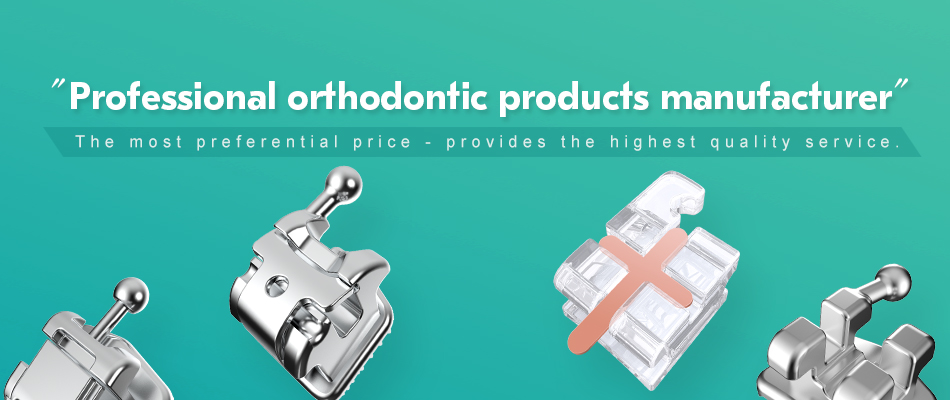
Denrotary is a specialist orthodontic manufacturer founded in 2012, serving fixed-treatment workflows with brackets, buccal tubes, arch wires, elastomeric accessories, and orthodontic instruments. Its portfolio includes NiTi, stainless steel, copper-containing, heat-activated, and reverse-curve wire options, alongside metal, ceramic, sapphire, and self-ligating bracket designs. The company highlights CE, ISO, and FDA-related compliance support, automated production, inspection capability, and export-oriented supply. Contact the manufacturer to discuss case-oriented product selection, documentation, and distributor requirements.

Post time: Nov-04-2026